Pest control services in Raleigh delivers targeted exterior barrier applications, crawl space moisture mitigation, and physical perimeter exclusion to protect local homes from wood-destroying organisms and structural pests. Finding active pests near family living spaces causes immediate stress regarding sanitation, property value, and personal safety.
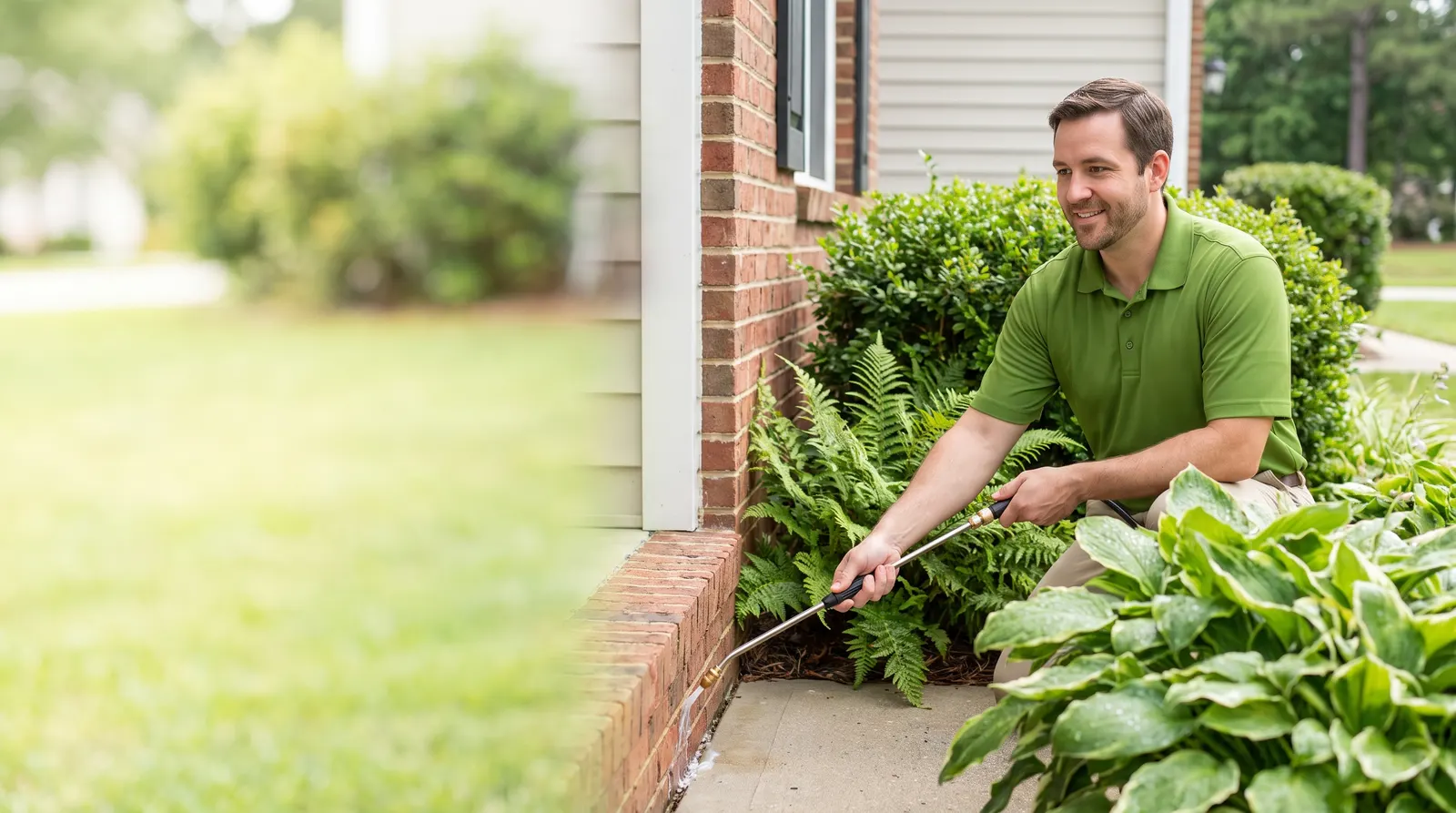
Pest control services in Raleigh is a specialized structural inspection, exterior barrier application, and biological exclusion service designed to eliminate wood-destroying insects, seasonal pests, and rodents from residential properties across Wake County.
Every service reflects the same meticulous attention to detail, whether it's a single job or a larger pest control services project across Raleigh.
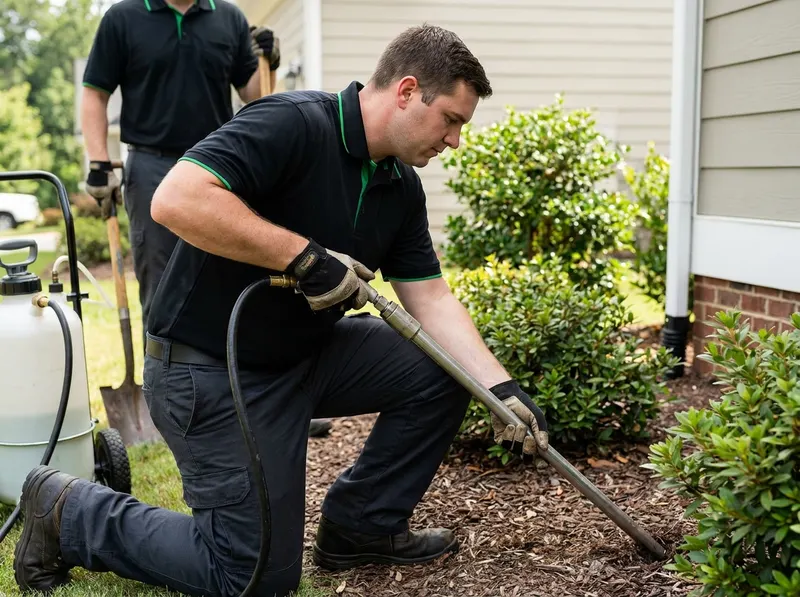
Subterranean termite control involves trenching and treating structural soil perimeter foundations using non-repellent liquid termiticides like fipronil at a rate of 4 gallons per 10 linear feet. This barriers workers from carrying moisture to satellite colonies within heavy clay subsoils, eliminating subterranean queens and protecting structural floor joists. Technicians trench continuous 6-inch by 6-inch channels along exterior stem walls, drill concrete slab expansions, and saturate structural entry footers to ensure complete continuous soil saturation without disturbing residential landscapes.
Get a quote →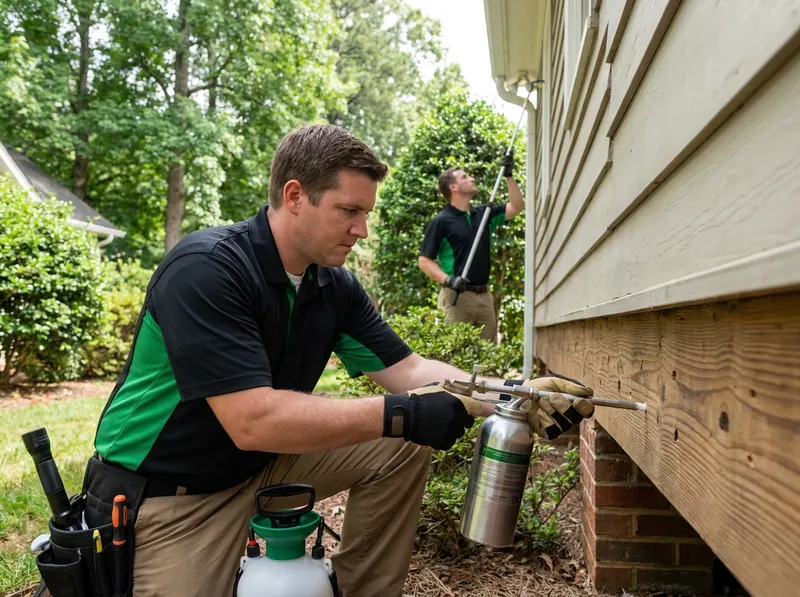
Carpenter ant management targets moist or decayed structural lumber near fascia lines, window frames, and crawl spaces. Technicians inject non-repellent macro-infusion sprays and slow-acting non-volatile carbohydrate baits into active nesting cavities, allowing foraging ants to carry active compounds directly into the core colony structure. Treatments address satellite colonies nesting inside wall framing without tearing down finished interior drywall, neutralizing structural excavation before primary load-bearing members suffer severe architectural compromise.
Get a quote →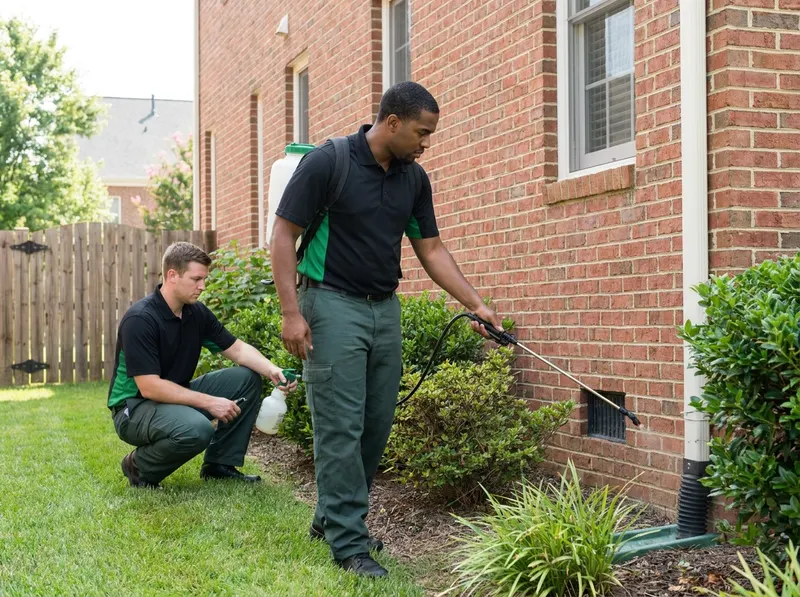
Smokybrown, American, and German cockroach elimination relies on liquid barrier bands applied 3 feet up the exterior foundation and 5 feet out across mulch beds. Technicians place granular insect growth regulators under decks and apply moisture-resistant microencapsulated dusts inside crawl space vents to disrupt breeding cycles. This exterior saturation halts perimeter pest migrations before large adult roaches squeeze past threshold weatherstripping or crawl space subfloor utility penetrations into bathroom vanities and kitchen cabinetry.
Get a quote →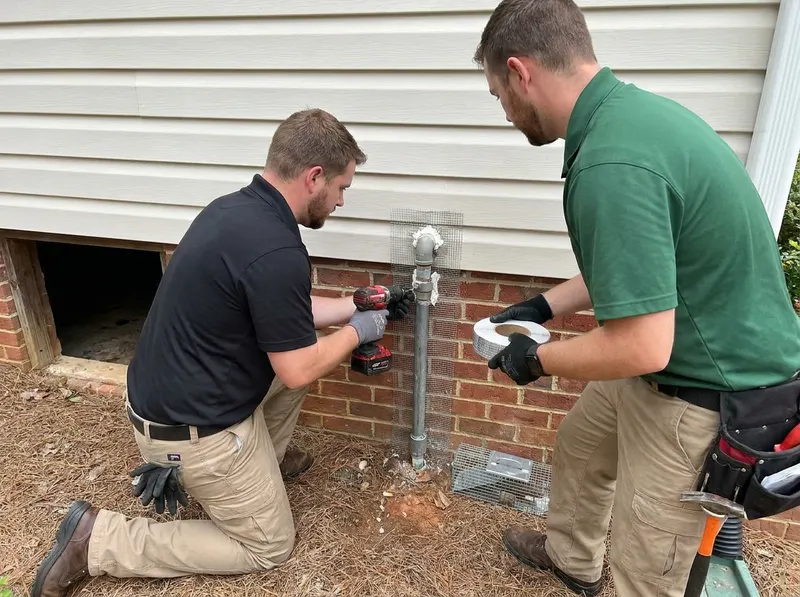
Rodent exclusion blocks entry points for roof rats, Norway rats, and house mice. Service begins with an on-site structural audit of the roofline, foundation vents, and crawl space access doors, followed by securing all gaps exceeding 0.25 inches with 19-gauge galvanized hardware cloth, copper mesh, and heavy polyurethane sealants. Strategic interior mechanical trapping zones clear remaining attic populations within 5 to 10 days, completely avoiding indoor carcass odor issues common with interior poison baits.
Get a quote →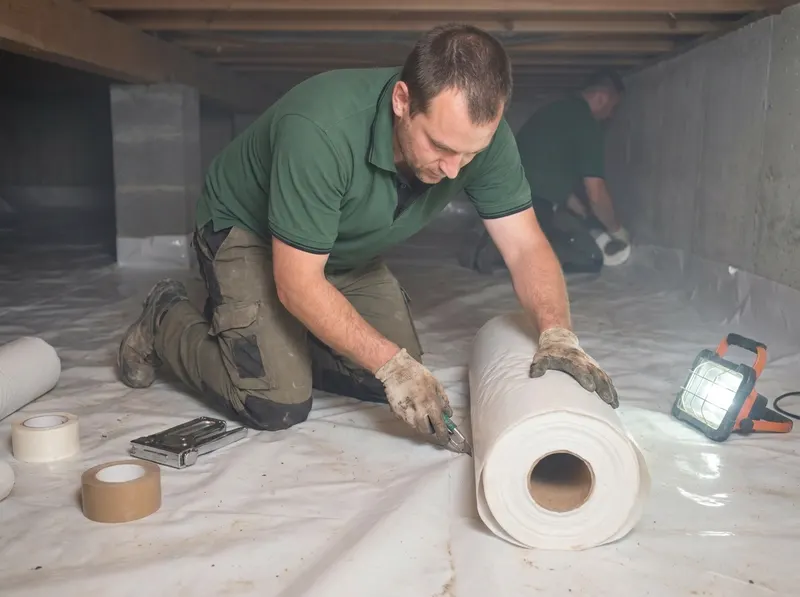
Crawl space pest mitigation controls wood moisture levels to deter dampwood termites, wood-boring powderpost beetles, and camel crickets. Technicians install heavy 12-mil to 20-mil reinforced vapor barriers across raw dirt, seal foundation piers, and balance subfloor relative humidity below the critical 15 percent structural threshold. Lowering ambient moisture levels inside unvented or closed crawl systems strips away the high-humidity environment required for wood decay fungi and crawling pest colonization.
Get a quote →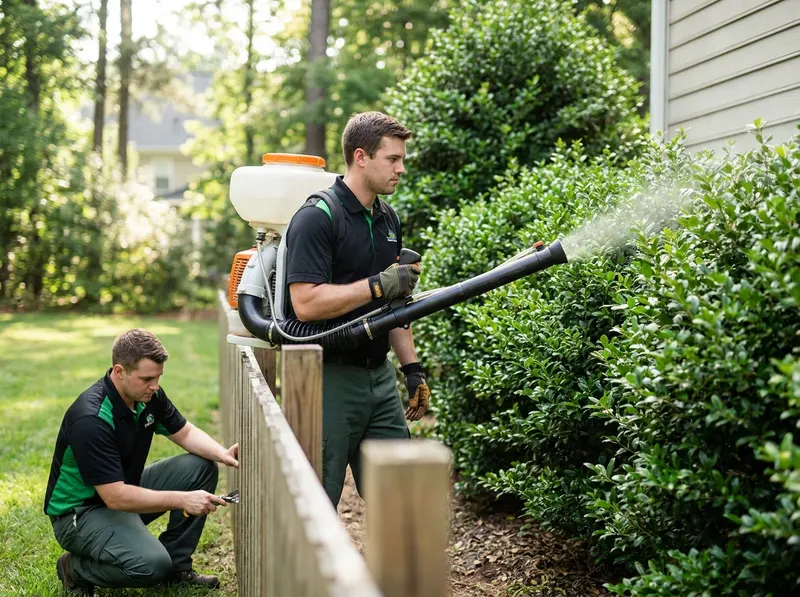
Mosquito barrier treatments target low-lying brush, shaded pine straw, and under-deck foliage where adult female mosquitoes harbor during daylight hours. Technicians apply specialized microencapsulated adulticides and micro-droplet larvicides to eliminate standing-water breeding reservoirs without harming non-target garden vegetation. Monthly applications from April through October dramatically reduce active biting vector populations around outdoor patios, swimming pool decks, and shaded family gathering perimeters.
Get a quote →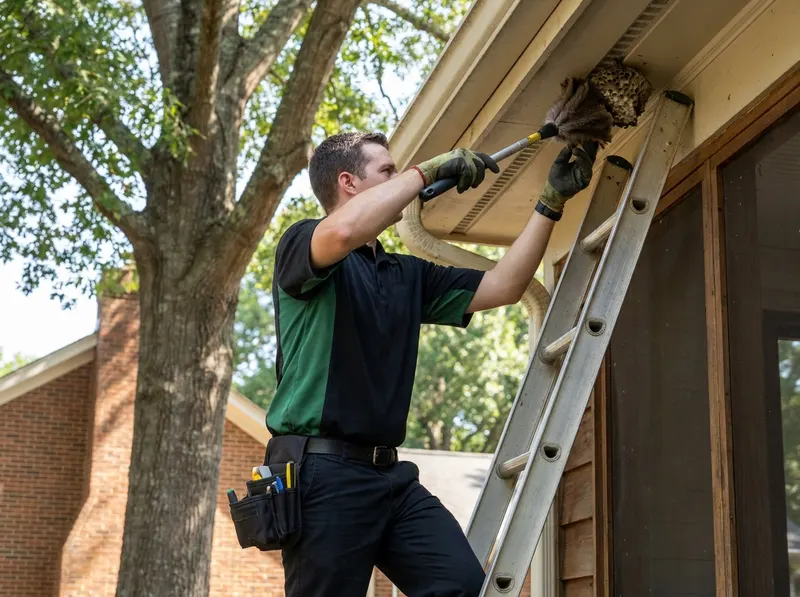
Hornet, yellowjacket, and paper wasp management neutralizes active structural nests on soffits, dormers, and crawl space overhangs. Protective barrier treatments include direct nest injections using pyrethroid concentrates followed by mechanical nest detachment and physical surface cleaning to strip remaining aggregation pheromones. Technicians inspect high-elevation roof eaves, attic ventilation louvers, and ground burrows to eliminate painful stinging hazards before routine yard maintenance or home exterior painting begins.
Get a quote →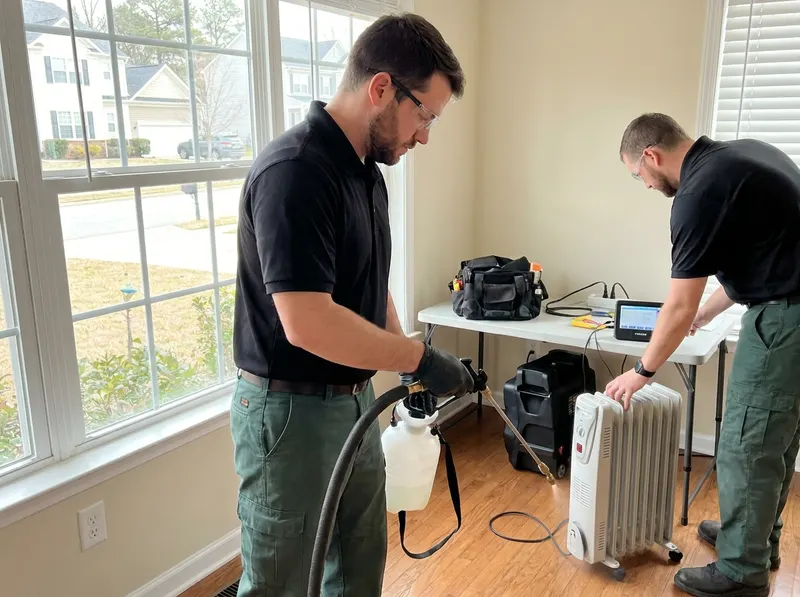
Bed bug eradication incorporates targeted high-heat applications reaching structural temperatures of 122 degrees Fahrenheit alongside residual chemical applications. Technicians treat mattress seams, box springs, baseboards, electrical plates, and adjacent wall voids to destroy all development phases including microscopic egg casings. Thorough structural thermal monitoring ensures lethal temperatures penetrate deep into box springs, upholstery seams, and baseboard crevices without damaging sensitive residential interior fixtures or electronic components.
Get a quote →You get a firm, itemized quote for your pest control services before any work begins, no surprises, no pressure.
Careful prep, tidy work, and a full cleanup when we are done. We treat your home and belongings like our own.
The same trusted, background-checked team from the first call to the final check.
Selecting the correct structural treatment depends directly on the biological profile of the target pest and the entry pathway into the home. If subterranean termites or carpenter ants show visible evidence near foundation walls or crawl space framing, choose a continuous subterranean liquid termiticide trench or non-repellent transfer treatment; if general crawling insects like smokybrown roaches, wolf spiders, or odorous house ants enter living spaces, choose an exterior foundation barrier paired with crawl space weep-hole dusting. The operational trade-off centers on treatment placement versus residual longevity: interior aerosol applications provide rapid knockdown of visible insects but degrade within two to four weeks, whereas exterior foundation band treatments of non-repellent liquid concentrate withstand Wake County summer rainstorms, lasting 60 to 90 days without exposing living areas to unnecessary chemical residues.
For rodent activity involving roof rats or Norway rats in attics and crawl spaces, mechanical snap-trapping paired with structural exclusion of quarter-inch gaps provides absolute containment, whereas rodenticide bait stations placed outside manage perimeter population density without risking dead animals decomposing inside wall cavities. When balancing cost and pest prevention, localized spot applications require smaller initial investments but leave untreated gaps where satellite colonies relocate, while complete continuous perimeter applications ensure every foundation pier, pipe penetration, and perimeter line maintains active chemical defense. If property owners face severe moisture buildup alongside insect intrusions, combining crawl space vapor barriers with microencapsulated perimeter sprays prevents fungal rot and suppresses insect breeding cycles simultaneously, eliminating the need for recurring interior chemical visits.
Every project gets a firm, written price after a free on-site visit. Ranges below for orientation.
Tell us about your pest control services job and we'll send a clear, written quote, usually the same day. Or just call and talk to a real Raleigh pro.
(984) 742-7171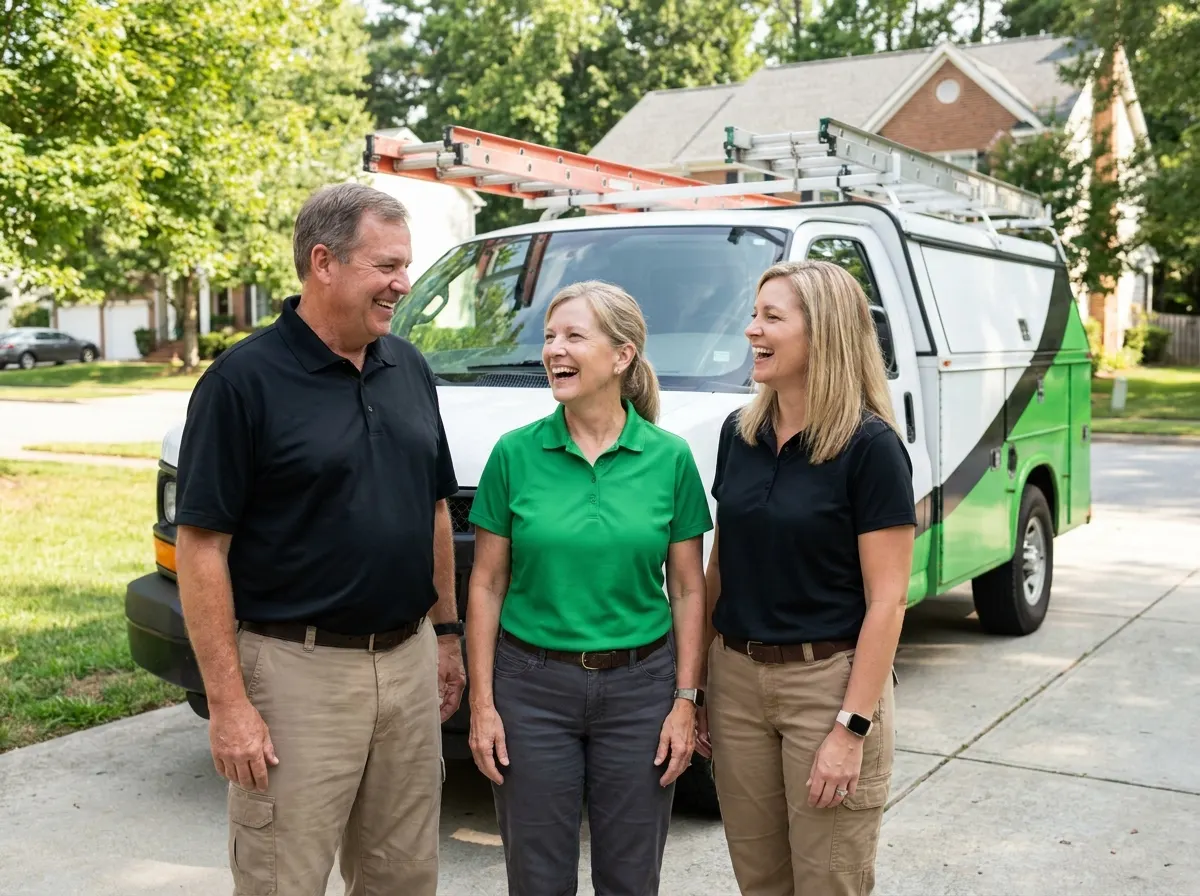
Raleigh homes face exceptional biological pest pressure due to dense red clay soils that trap sub-surface water around shallow slab and crawl space foundations. Neighborhoods near mature tree canopies such as Historic Oakwood, Five Points, and properties flanking William B. Umstead State Park experience rapid seasonal transitions, where high subfloor humidity during summer encourages smokybrown cockroaches, followed by subterranean termite swarms as ground temperatures thaw each March. Older residential structures in Hayes Barton and Boylan Heights feature brick pier foundations that frequently settle, creating hidden expansion fissures where subterranean termites build mud tubes directly behind exterior decorative veneers. Newer developments near Brier Creek and North Hills often disturb native forest floors during construction, pushing displaced field mice, roof rats, and carpenter ant colonies straight toward fresh residential framing. Effective property defense in Wake County requires matching chemical barriers to local clay absorption rates and sealing low-lying brick foundation vents against ambient forest moisture.
Free estimates for Raleigh & the surrounding area.
 Trenvora Pest Management