Thermal bed bug remediation elevates interior room air to lethal thermal death points between 122°F and 135°F using industrial high-output electric or indirect-fired heating units. While standard over-the-counter…
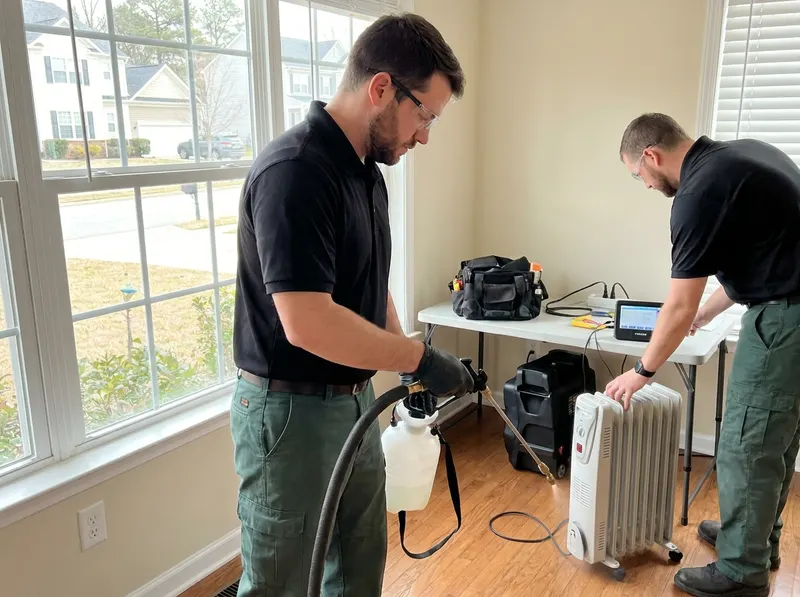
Thermal bed bug remediation elevates interior room air to lethal thermal death points between 122°F and 135°F using industrial high-output electric or indirect-fired heating units. While standard over-the-counter pyrethroids cause synthetic repellency that drives insects deeper into drywall framing and adjoining units, non-repellent liquid chemistry allows foraging bugs to cross treated thresholds undetected, transferring micro-doses to harborage sites. This dual protocol protects older structural framing found in historic Raleigh homes across Historic Oakwood, Boylan Heights, and Hayes Barton, where dense plaster and lath construction otherwise shield harborages from standard liquid penetrations. In newer multi-family developments across Cameron Village, Five Points, and Brier Creek, the non-repellent perimeter barrier acts as an insurance layer along pipe chases and shared utility conduits, stopping lateral migrations between properties.
Selecting between full-structure thermal remediation and standalone non-repellent residual applications depends on structural density, clutter thresholds, and speed requirements. If an infestation is concentrated in a single contained bedroom with minimal structural clutter, a localized non-repellent residual and steam application offers a lower entry point starting at $250; if an entire multi-story residence with heavy soft furnishings in North Hills, Mordecai, or Hedingham exhibits visual staining, heat treatment provides 100% single-day kill rates across all developmental stages, including desiccation-resistant eggs. The operational trade-off centers on preparation intensity: thermal remediation demands complete removal of heat-sensitive items, such as aerosol cans, candles, vinyl blinds, oil paintings, and medications, to allow unhindered air circulation at high velocities, whereas chemical-only regimens require multiple staggered follow-up visits spaced 14 days apart to intercept newly hatched nymphs before reproductive maturity.
Wake County residential humidity and microclimates, particularly around forested corridors near William B. Umstead State Park, Lake Johnson Park, and Historic Yates Mill County Park, influence ambient thermal dissipation rates during cooler shoulder months. Technicians deploy continuous multi-point wireless temperature sensors under subfloors, inside hollow bedframes, and within exterior insulation layers to verify that core harborage zones reach 122°F for a minimum sustained duration of 90 minutes. This targeted physical approach eliminates reliance on persistent airborne chemical fogs, protecting children and household pets from respiratory exposure while ensuring non-repellent chemical barriers remain settled strictly along hidden sub-baseboards and outlet interiors.
Every job gets a firm, written price after a free on-site visit.
Tell us about your bed bug heat and non-repellent chemical remediation job in Raleigh and we'll send a clear, written quote, usually the same day.
 Trenvora Pest Management