Rodent exclusion addresses the vulnerability of Raleigh residential architecture. Traditional brick foundation vents, crawl space access doors, and roof junctions on older homes in Historic Oakwood, Mordecai, and…
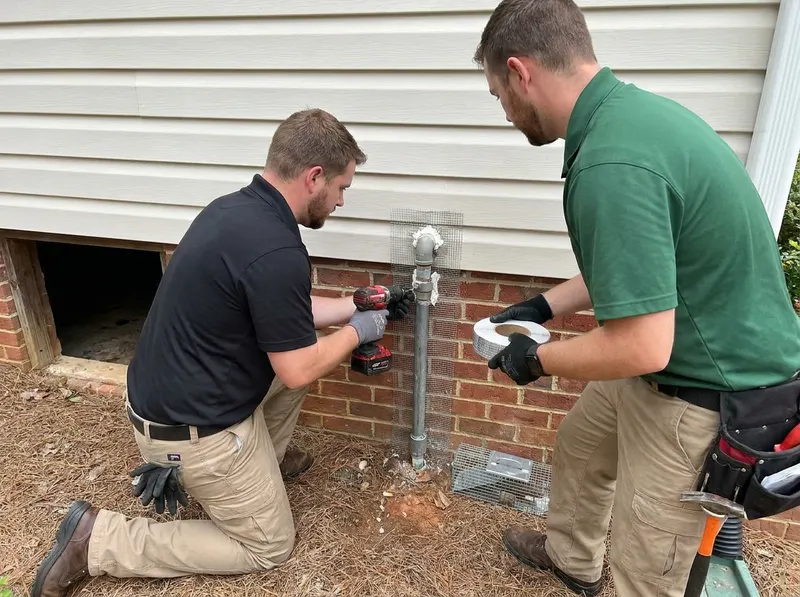
Rodent exclusion addresses the vulnerability of Raleigh residential architecture. Traditional brick foundation vents, crawl space access doors, and roof junctions on older homes in Historic Oakwood, Mordecai, and Boylan Heights feature gap tolerances that permit Norway rats and house mice to slip through 0.25-inch openings. In newer slab-on-grade developments near Brier Creek and Southpoint Ridge, vinyl corner posts and HVAC line-set chases offer clear pathways directly into interior wall voids. Unlike generic pesticide broadcast methods, exclusion physically alters the building envelope using 19-gauge hardware cloth, metal flashing, and expanding foam infused with copper mesh.
Trapping operations deploy clean, covered mechanical snap stations placed directly along interior runways, crawl space sill plates, and attic joists. This targeted approach avoids secondary poisoning risks to children, domestic pets, and native predatory birds around William B. Umstead State Park. For moderate suburban activity in Five Points and Hayes Barton, mechanical traps eliminate breeding pairs within 3 to 14 days, measured by daily monitoring logs. If an attic harbors established roof rat colonies, exclusion repairs occur concurrently with interior trapping to prevent trapped animals from seeking food in living spaces. The trade-off between localized snap trapping and full-perimeter exclusion involves long-term defense: localized trapping removes the active population inside, whereas full-perimeter exclusion permanently blocks seasonal migration driven by fall temperature drops in Wake County.
Structural moisture conditions accelerate rodent pressures in North Hills and Hedingham. High relative humidity near Lake Johnson Park and Historic Yates Mill County Park softens exterior sub-fascia boards and foundation vents, creating entry corridors for rodents seeking dry nesting areas. Step 1 involves an inspection of the foundation perimeter, attic crawlspace, and roof pitch transitions. Step 2 requires installation of metal ridge vent guards, weep-hole covers, and door sweeps along garage thresholds. Step 3 places labeled, tamper-resistant mechanical traps along transit pipes and wall plates. Step 4 consists of follow-up checks at 5-to-7-day intervals until zero rodent activity registers on tracking powder indicators. All services require no mandatory multi-year contracts, focusing entirely on permanent mechanical barriers and immediate rodent extraction.
Every job gets a firm, written price after a free on-site visit.
Tell us about your rodent exclusion and trapping job in Raleigh and we'll send a clear, written quote, usually the same day.
 Trenvora Pest Management