Subfloor foundation framing in Wake County encounters intense relative humidity throughout long southern summers, creating microclimates where wood-boring beetles thrive. In older residential enclaves such as Historic…
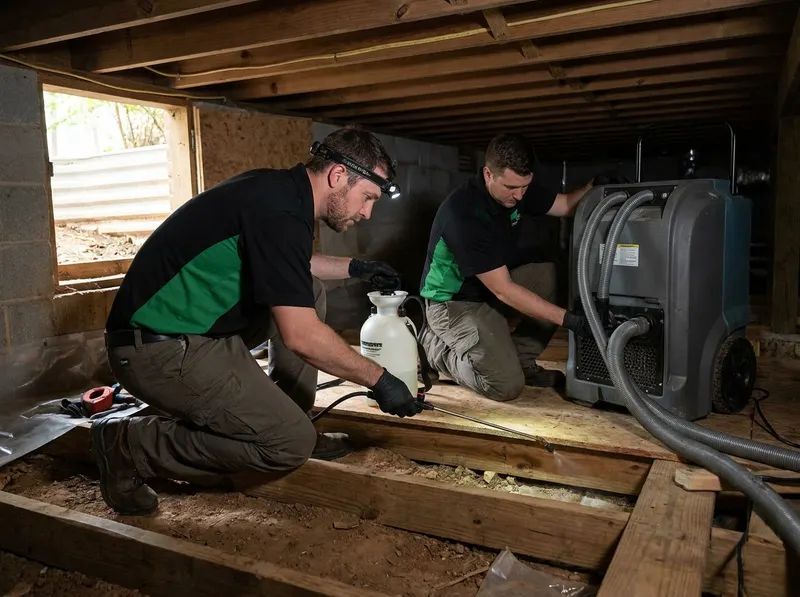
Subfloor foundation framing in Wake County encounters intense relative humidity throughout long southern summers, creating microclimates where wood-boring beetles thrive. In older residential enclaves such as Historic Oakwood, Mordecai, and Boylan Heights, crawl space joists often register moisture contents above 20%. Wood-boring beetles, primarily lyctine and anobiid powderpost varieties, require sustained timber moisture above 13% to 15% for larvae to digest cellulose. When crawl space air saturates, female beetles deposit eggs inside unsealed pine and oak framing pores. Remediation combines direct liquid borate mineral diffusion into structural sills with continuous mechanical moisture extraction, halting larval development while keeping living spaces free from synthetic airborne residues.
Sustained subfloor protection requires an operational separation between moisture extraction and chemical intervention. Surface pesticide misting fails because wood-boring beetle larvae chew deep within the interior rings of floor joists and subflooring planks. Structural borate salt applications diffuse directly through timber pores, leaving residual mineral crystals that eliminate emerging beetles without chemical volatility or strong odors. In brick-pier foundations common to Hayes Barton and Five Points, as well as closed-plenum setups around North Hills and Cameron Village, chemical treatment alone cannot prevent re-infestation if the crawl space relative humidity stays above 60%. Installing a dedicated, self-draining crawl space dehumidifier mechanically restricts air moisture, preventing the damp environment that powderpost beetles and subterranean decay fungi require.
Choosing a targeted dehumidification and wood-treatment program eliminates the need for whole-structure fumigation tents or perpetual monthly spray subscriptions. While localized liquid treatments address immediate timber infestations in specific crawl bays, open foundation vents in humid climates continuously draw in warm, wet outdoor air. A sealed vapor barrier paired with an ENERGY STAR crawl space dehumidifier shifts the subterranean equilibrium to an optimal 50% relative humidity. Homeowners managing ranch foundations in Hedingham, Southpoint Ridge, or newer multi-story properties along Brier Creek balance upfront installation costs against the ongoing structural risk of subfloor deflection and costly structural sistering repairs.
Every job gets a firm, written price after a free on-site visit.
Tell us about your crawl space dehumidification & wood-boring beetle remediation job in Raleigh and we'll send a clear, written quote, usually the same day.
 Trenvora Pest Management